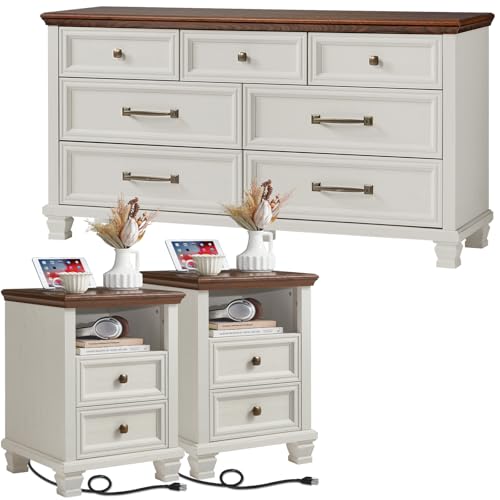
Farmhouse Nightstand and Dresser: Complete Buyer's Guide
Everything you need to know before choosing a farmhouse nightstand and dresser set — from wood types and finish options to drawer layouts, sizing, and styling. Make a confident, well-informed decision for your bedroom.
Start Reading the GuideWhat Makes a Farmhouse Nightstand and Dresser Set
A farmhouse nightstand and dresser set is bedroom furniture designed around a warm, rural-inspired aesthetic. The style draws from traditional country homes and modernized rustic living, combining practical storage with visual character. If you are researching this category, you likely already know you want the farmhouse look — what you need now is clarity on what actually defines it and how to evaluate quality before you commit.
Farmhouse furniture is recognized by several recurring design cues. These are the features that separate a genuine farmhouse piece from a generic bedroom set:
- Slatted or panel detailing — vertical or horizontal wood panels that add texture without ornamentation.
- Distressed or weathered finishes — intentionally aged surfaces that suggest history and warmth.
- Neutral and natural tones — whitewashed, natural wood, soft gray, and warm brown finishes dominate the category.
- Simple hardware — cup pulls, bar handles, and round knobs in matte black, oil-rubbed bronze, or brushed nickel.
- Sturdy, grounded silhouettes — clean lines, bracket feet, and substantial proportions rather than delicate curves.
- Mixed-material accents — wood paired with metal frames, X-bracing, or exposed hinges.
The pairing of a nightstand and dresser is central to the farmhouse bedroom concept. Because both pieces share the same finish, hardware family, and construction language, the room reads as intentional and cohesive rather than assembled piece by piece. This is why buyers in the research stage often look for a coordinated set instead of shopping for each item separately.
Research insight: Farmhouse sets are most often evaluated on three dimensions — visual authenticity, storage capacity, and construction durability. A set that scores well on all three is the set worth buying.
Why Choose a Farmhouse Nightstand and Dresser Set
Choosing a coordinated set solves several problems at once. It removes the guesswork of matching finishes, simplifies delivery and assembly, and typically produces a more polished result than mixing individual pieces from different collections. Here is what a farmhouse set brings to a bedroom:
Visual Cohesion
The dresser and nightstand share the same wood tone, panel treatment, and hardware finish. This consistency is difficult to reproduce when buying pieces separately, especially when shopping across brands with different color standards.
Practical Storage Balance
A dresser handles bulk clothing storage while the nightstand keeps daily essentials within arm's reach. Together they cover the two storage zones most bedrooms actually need: the wardrobe zone and the bedside zone.
Design Longevity
Farmhouse style is grounded in traditional furniture forms rather than fast-moving trends. A well-built set in a neutral finish tends to stay relevant through years of redecorating, which makes it a sensible long-term investment for a primary bedroom or guest room.
Flexible Placement
Because farmhouse pieces are designed with clean lines, they fit comfortably into bedrooms, guest rooms, and even open-plan living spaces. A farmhouse dresser can work as a hallway console or living room storage unit, while the nightstand can serve as a side table in a reading nook.
Best For
Primary bedrooms, guest rooms, farmhouse-style homes, rustic and coastal interiors, and anyone who wants a coordinated look with minimal design effort.
Consider Instead
Modern minimalist interiors, ultra-small bedrooms where a compact small dresser is the priority, or rooms that need the taller storage profile of a tall dresser.
Farmhouse Styles Compared
Farmhouse is not a single look. Within the category there are several recognizable sub-styles, and the one you choose should align with the rest of your home. The table below compares the main options.
| Style | Signature Details | Best For |
|---|---|---|
| Classic Farmhouse | Whitewashed or painted finish, panel fronts, cup pulls, bracket feet | Traditional country homes and bright, airy bedrooms |
| Modern Farmhouse | Clean lines, matte black hardware, mixed wood and metal, minimal distressing | Contemporary homes with a rustic touch |
| Rustic Farmhouse | Heavy distressing, reclaimed-looking wood, visible grain and knots | Cabin, lodge, and nature-inspired interiors |
| Coastal Farmhouse | Soft white and driftwood tones, beadboard panels, breezy finishes | Beach houses and light, relaxed bedrooms |
| Industrial Farmhouse | Metal frames, exposed rivets, dark wood paired with steel | Loft apartments and urban rustic spaces |
If you are drawn to the painted look, a farmhouse dresser in a soft white finish is the most versatile choice and pairs easily with most bedding and wall colors. For a warmer, wood-forward look, explore farmhouse style bedroom dressers that emphasize natural grain and subtle distressing.
Materials and Finish Options
The material determines how the set ages, how heavy it feels in the room, and how well it holds up to daily use. Farmhouse furniture is available in a range of constructions, and understanding the differences is one of the most important steps in the buying process.
Solid Wood
Solid wood construction uses real timber throughout the main body and drawer fronts. It is the most durable option, can be refinished in the future, and develops character over time. Common species include oak, pine, and acacia. Solid wood sits at the premium and luxury tiers and is the strongest long-term investment in the category.
Wood Veneer over Engineered Core
A thin layer of real wood over plywood or MDF core. This method delivers a consistent grain appearance and good stability at a mid-range position. Quality veneer construction is a solid choice for the tier and performs well in normal bedroom conditions.
Laminate and Painted Engineered Wood
Engineered panels with a laminate or painted surface. These are entry-level constructions that suit guest rooms, rentals, or temporary setups. They are lighter and easier to move but offer less longevity than solid wood.
Metal Accents
Many farmhouse sets combine wood bodies with metal frames, corner brackets, or hardware. Powder-coated steel and iron accents are durable and resistant to rust when properly finished.
Finish guidance: Look for multi-step finishes with a protective topcoat. A well-sealed finish resists moisture rings from bedside drinks and everyday wear far better than a single-coat painted surface.
For a broader comparison of wood species and their characteristics, see our guide to materials and finishes.
Sizing and Room Planning
Size is where most buyers make avoidable mistakes. A dresser that overwhelms the room or a nightstand that crowds the bed will undermine the entire look, no matter how good the construction is. Plan the footprint before you shop.
Dresser Size
Standard dressers range from compact three-drawer units to wide six-drawer and nine-drawer models. For a primary bedroom, a wide dresser in the five- to six-drawer range is the most common choice. If floor space is limited, a narrow dresser preserves walking room while still providing useful storage. Rooms with generous wall space can accommodate a wide dresser that doubles as a display surface.
Nightstand Size
A nightstand should sit level with or slightly below the top of the mattress. Its width should leave clear access to the bed and, where relevant, the closet or window. Measure the gap between the bed and the wall before choosing.
Clearance Rules
- Leave at least 24 inches of walking clearance in front of dresser drawers when fully open.
- Keep at least 2 inches between the nightstand and the wall to allow for baseboards and ventilation.
- Allow room for drawer pulls — they add roughly 1 to 2 inches of depth.
- Confirm door and stairwell widths before ordering oversized pieces.
| Room Type | Suggested Dresser Profile | Nightstand Approach |
|---|---|---|
| Small bedroom | Compact three to four drawer unit | Slim single-drawer nightstand |
| Standard primary bedroom | Five to six drawer wide dresser | Two-drawer nightstand on each side |
| Guest room | Four to five drawer dresser | One nightstand with open shelf |
| Large suite | Six to nine drawer dresser or chest | Full-size nightstand with charging features |
Storage and Drawer Features
Storage functionality is the practical heart of any dresser purchase. Two sets can look nearly identical yet behave very differently in daily use. Pay attention to these specifics.
Drawer Glides and Slides
Drawer slides determine how smooth and quiet the piece feels. Entry-level sets often use basic side-mounted rollers. Mid-range sets typically move to ball-bearing slides with smoother travel. Premium and high-end sets use full-extension, soft-close undermount slides with higher weight ratings. If the dresser will hold heavier items like jeans or linens, prioritize a higher slide rating.
Drawer Box Construction
Look for dovetail joinery on the drawer boxes — a sign of durable construction — and reinforced bottoms on deeper drawers. Stapled or glued boxes are common at the entry level and are less resistant to repeated loading.
Interior Configuration
- Deep drawers suit folded clothing, linens, and bulky knitwear.
- Shallow drawers suit accessories, delicates, and small items.
- Felt-lined top drawers protect jewelry and electronics.
- Divided drawers help organize socks, belts, and small accessories.
Nightstand-Specific Features
Modern farmhouse nightstands frequently include integrated charging ports, USB outlets, open lower shelves, and cable management cutouts. These features are genuinely useful in daily life and are worth prioritizing if the nightstand will serve as a bedside command center.
Buyer tip: Bring a measuring tape and a mental inventory of what you plan to store. Matching drawer depth to your actual belongings prevents the common frustration of drawers that are too shallow for sweaters or too deep for accessories.
Quality Tiers Explained
To evaluate farmhouse nightstand and dresser sets objectively, it helps to understand how the market segments by construction quality. The tiers below describe relative positioning — they are not tied to any specific figure or currency and remain valid over time.
Essential Tier
Engineered wood with laminate or painted surfaces. Basic side-mounted glides. Suitable for guest rooms, rentals, and short-term setups. Expect lighter weight and simpler drawer boxes.
Balanced Tier
Wood veneer over engineered core or mixed solid-and-panel construction. Ball-bearing slides and more refined finishing. A solid choice for the tier and the most common pick for family bedrooms.
High-End Tier
Solid wood main construction, dovetail drawer boxes, soft-close undermount slides, and multi-step finishes. Durable construction that holds up to years of daily use and can be refinished.
Flagship Tier
Heirloom-grade joinery, hand-applied finishes, premium hardware, and meticulous detailing. A long-term investment intended to be passed down or used for decades.
As a general rule, moving up a tier brings smoother drawer mechanisms, more consistent finishing, and better structural rigidity. Mid-range models typically offer noticeably smoother glide action than entry-level pieces, while premium sets add soft-close functionality and heavier weight ratings. Match the tier to how intensively the furniture will be used and how long you intend to keep it.
Matching the Dresser and Nightstand
A coordinated farmhouse set is greater than the sum of its parts, but the pairing needs to be deliberate. These are the elements that should align between the two pieces.
- Finish and color: The wood tone or paint color should match exactly — not merely be in the same family.
- Hardware family: Cup pulls on the dresser and bar handles on the nightstand can coexist, but the metal finish should be identical.
- Panel and trim language: Slatted fronts, beadboard panels, or X-bracing should repeat across both pieces.
- Proportion: A substantial dresser pairs better with a nightstand of comparable visual weight than with a very delicate one.
- Foot style: Bracket feet, turned legs, or metal legs should be consistent.
If you are building the set gradually, a farmhouse dresser and nightstand set purchased together guarantees these alignments. If you prefer to assemble the pieces over time, a farmhouse dresser and nightstand pairing from the same collection is the safest approach.
Consider the surrounding room as well. Farmhouse pieces in a soft white finish pair naturally with white dressers elsewhere in the home and read as a coherent design language. Wood-toned sets integrate well with natural and neutral palettes.
Key Buying Factors: A Practical Checklist
Before finalizing a decision, run through this checklist. It captures the factors that most often separate a satisfying purchase from a regretful one.
| Factor | What to Verify | Why It Matters |
|---|---|---|
| Construction | Solid wood, veneer, or engineered; drawer joinery type | Determines durability and refinishability |
| Drawer slides | Ball-bearing, full-extension, soft-close, weight rating | Affects daily feel and long-term reliability |
| Dimensions | Footprint, height, drawer depth, clearance needs | Prevents fit and circulation problems |
| Finish | Sealed topcoat, distressed or smooth, color consistency | Impacts maintenance and visual cohesion |
| Hardware | Metal finish, pull style, included or separate | Ties the set together visually |
| Assembly | Pre-assembled, flat-pack, or partially assembled | Affects setup time and stability |
| Safety | Anti-tip hardware, tip-over restraint inclusion | Critical for households with children |
| Tier positioning | Entry, mid-range, premium, or flagship construction | Aligns the piece with intended use and longevity |
Safety note: Always anchor dressers and nightstands to the wall using the included anti-tip kit. This is especially important in homes with young children, and it is recommended by furniture safety standards regardless of construction quality.
Care and Maintenance
Farmhouse furniture is designed to look lived-in, but it still benefits from routine care. A few simple habits keep the finish and mechanisms performing well.
- Dust with a soft, dry cloth weekly to prevent abrasive buildup.
- Use a damp cloth only on sealed finishes, then dry immediately.
- Place coasters under plants and drinks to prevent moisture rings.
- Keep the furniture out of direct, prolonged sunlight to slow finish fading.
- Lubricate drawer slides annually with a silicone-based product.
- Tighten hardware periodically, especially on pieces with cup pulls or bar handles.
- Avoid placing heavy items on the top surface of the nightstand if it has a thin panel construction.
For deeper guidance on cleaning and preserving wood finishes, see our article on how to clean a dresser.
Frequently Asked Questions
What should I look for in a farmhouse nightstand and dresser set?
Focus on four things: consistent finish and hardware across both pieces, drawer slides that match your intended use, solid construction at the level you need, and dimensions that fit your room with adequate clearance. Verify that anti-tip hardware is included.
Is solid wood always better than engineered wood for farmhouse furniture?
Not always. Solid wood offers greater durability and refinishability, but well-made veneer over an engineered core is stable and consistent in appearance. The right choice depends on how intensively the furniture will be used and how long you plan to keep it. Solid wood sits at the premium and luxury tiers; quality veneer is a balanced mid-range option.
How do I match a farmhouse nightstand to an existing dresser?
Match the finish color exactly, use the same metal finish for hardware, and repeat at least one design motif — such as slatted panels or bracket feet — across both pieces. If exact matching is difficult, choose pieces from the same collection.
What size nightstand works with a farmhouse bed?
The nightstand top should sit level with or just below the mattress surface. Width should leave clear access to the bed and nearby doors or windows. Measure the gap between the bed and the wall before ordering, and account for the added depth of drawer pulls.
Do farmhouse dressers require assembly?
It varies. Some sets arrive fully assembled, others are flat-packed, and many fall in between. Check the assembly requirement before ordering, and confirm that the boxed pieces will fit through your doorways and stairwells.
How do I keep a distressed farmhouse finish looking its best?
Dust regularly with a soft cloth, avoid harsh chemical cleaners, use coasters under drinks and plants, and keep the piece out of prolonged direct sunlight. A sealed topcoat protects the distressed surface without altering its appearance.
Ready to Choose Your Farmhouse Set?
You now have the framework to evaluate farmhouse nightstand and dresser sets with confidence — construction, storage, sizing, style, and quality tier. Explore our recommended options below and compare features that matter to your bedroom.
Explore Recommended Sets