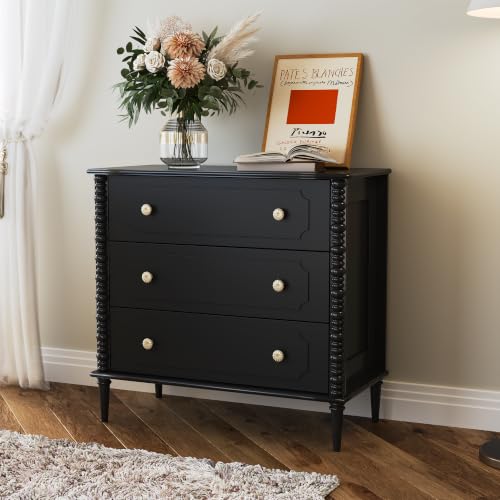
Black Antique Dresser: Timeless Character for Your Bedroom
A black antique dresser blends old-world craftsmanship with bold, modern presence. Whether you are chasing a distressed French provincial look or a stately Victorian chest, this guide helps you understand styles, materials, drawer layouts, and what to inspect before you commit.
Explore the Buying GuideWhat Counts as a Black Antique Dresser?
The word “antique” is often used loosely. Strictly speaking, a true antique is at least 100 years old, which places genuine black antique dressers in the Victorian, Edwardian, and early Art Deco eras. In practice, the market also uses the term for vintage pieces from the mid-20th century that carry period detailing such as dovetailed drawers, turned legs, and hand-finished patina.
Black finishes on antique dressers usually fall into three categories:
- Original factory finish: Less common, but some late-19th-century pieces were ebonized using a staining and polishing process that darkened the wood.
- Later re-finish: Many antique dressers were painted or ebonized decades after manufacture, which is acceptable if the prep work was done properly.
- Modern antique-style reproductions: New pieces built to mimic antique forms, often with distressed edges and vintage-inspired hardware. These are a practical option if you want the look without the conservation responsibilities.
If authenticity matters to you, examine the drawer joinery. Hand-cut dovetails, uneven saw marks, and hand-forged nails point to genuine age. Machine-cut dovetails and uniform fasteners suggest a later piece or reproduction.
Popular Styles of Black Antique Dressers
The style of your dresser shapes the whole room. Here are the most common directions and what each one brings:
- French Provincial: Curved bombe fronts, cabriole legs, and ornate brass hardware. A black finish on this silhouette reads dramatic and romantic. If this appeals, explore black French provincial dressers.
- Victorian / Eastlake: Tall chests with carved details, marble tops, and substantial proportions. These are statement pieces that suit high ceilings and traditional bedrooms.
- Farmhouse and rustic: Simpler lines with distressed black paint and natural wood showing through. A black farmhouse dresser is a relaxed, livable interpretation.
- Distressed / shabby chic: Deliberately worn edges and rubbed-through paint for an aged, collected feel. See black distressed dressers for this look.
- Art Deco and mid-century: Cleaner geometry, tapered legs, and minimal ornament. These pair well with modern interiors and are easier to blend into contemporary rooms.
If you are building a coordinated room, matching your dresser with complementary pieces makes styling simpler. Browse black dresser and nightstand sets and black bedroom dressers and chests for cohesive options.
Wood, Construction, and Finish Quality
The underlying wood matters as much as the black finish. Antique dressers are typically built from oak, mahogany, walnut, or pine. Oak and mahogany offer dense, heavy-duty construction that resists warping. Pine is lighter and more prone to dents, which is part of its rustic charm but worth knowing before purchase.
When evaluating a black finish, look for these signals of quality:
- Even coverage: Streaky or thin patches suggest rushed prep work and may flake over time.
- Intentional distressing: Wear should look deliberate and consistent, not random or accidental.
- Protected topcoat: A waxed or lacquered surface resists moisture and fingerprints better than bare paint.
- Hardware integrity: Original brass or iron pulls add character and resale appeal. Replacements are fine but should match the period.
Drawer action is the most overlooked quality check. Pull each drawer fully open and closed. Smooth, quiet movement with minimal side-to-side wobble indicates solid build. If the drawers use wooden runners rather than metal slides, expect a heavier feel but often greater longevity with proper waxing.
Understanding Market Tiers
Rather than fixating on numbers, it helps to understand where a black antique dresser sits in the market. The tiers below describe relative positioning so you can match expectations to construction quality.
| Tier | Typical Characteristics | Best For |
|---|---|---|
| Entry-level | Modern reproduction, partial wood or engineered core, basic hardware, simpler joinery | Renters, first apartments, accent use |
| Mid-range | Solid wood primary surfaces, dovetail-style joints, decent slides, consistent finish | Everyday family bedrooms, long-term daily use |
| Premium | Full solid wood construction, period-accurate detailing, quality hardware, hand-finished patina | Design-focused rooms, collectors building a coordinated set |
| Luxury / museum-grade | Genuine period antique, documented provenance, original hardware and finish, expert restoration | Collectors, heritage interiors, investment-minded buyers |
A mid-range black antique-style dresser often gives the best balance of character and durability for daily use. Premium and luxury tiers are worthwhile when the piece is a focal point and you plan to keep it for decades.
Black Antique Dresser Buying Checklist
Before you commit, run through these checks. They apply whether you are shopping a genuine antique or an antique-inspired reproduction.
- Measure the space and the path: Confirm the dresser fits the wall and that doorways and stairwells allow delivery. Antique chests are often deeper than modern equivalents.
- Check drawer depth and layout: Deep drawers suit bulky knitwear and linens, while shallow drawers organize accessories and folded shirts. If storage capacity is your priority, consider a black dresser with deep drawers.
- Inspect stability: Press gently on the top corners. Wobble suggests loose joints or an uneven base. Antique pieces may need leveling shims, which is normal.
- Look for structural repairs: Reglued joints and replaced drawer bottoms are acceptable if done well. Cracks in load-bearing rails are a warning sign.
- Verify the finish: Ask whether the black finish is original, restored, or new. New paint over poorly prepped surfaces will peel.
- Consider mirror options: A mirror transforms the piece into a dressing station. Explore black bedroom dressers with mirror if you want that functionality.
- Plan placement: Keep the dresser out of direct sunlight to protect the finish and prevent uneven fading.
If you are furnishing an entire room, it is worth reviewing black bedroom sets and black designer dressers to compare silhouettes before deciding.
Styling a Black Antique Dresser
Black furniture is a natural anchor. It absorbs light and makes surrounding textures pop, which is why designers use it to add depth in neutral rooms.
- Pair with warm metals: Brass and gold hardware or accents soften the severity of black. See black and gold dressers for this combination.
- Contrast with natural textures: Rattan, linen, and raw wood balance the visual weight. A black and rattan dresser does this natively.
- Layer lighting: A table lamp or wall sconce above the dresser highlights the finish and makes the piece feel intentional.
- Keep the top curated: Two or three objects, a tray, and a small plant or mirror is enough. Overcrowding hides the silhouette.
If you are working within a small room, a black dresser for the bedroom in a narrower profile keeps the layout open while retaining presence.
Care and Maintenance
Antique and antique-style black finishes need gentle care. Harsh cleaners strip wax and dull the surface.
- Dust weekly with a soft, dry microfiber cloth.
- Wipe spills promptly with a barely damp cloth, then dry immediately.
- Apply a quality furniture wax once or twice a year to protect the finish.
- Avoid silicone-based polishes, which can build up and attract dust.
- Keep the piece away from radiators and direct sunlight to prevent cracking and fading.
Frequently Asked Questions
Is a black antique dresser hard to match with other furniture?
Not at all. Black is one of the most versatile finishes in furniture. It pairs naturally with wood tones, neutral upholstery, and both warm and cool metal accents. The key is to repeat the black in one or two other elements, such as a mirror frame or lamp base, so the dresser feels intentional rather than isolated.
Should I buy a genuine antique or a reproduction?
Genuine antiques offer history, original craftsmanship, and often better materials. Reproductions offer predictable condition and easier maintenance. If you want character without conservation duties, a premium reproduction is a sensible choice. If you value provenance and long-term investment, a documented antique is worth the search.
How can I tell if a black finish is original?
Look inside drawers and behind the piece. Original finishes usually show consistent aging and patina in hidden areas. A finish that looks fresh and uniform everywhere, especially on the underside, is likely newer. Reputable sellers will disclose whether the finish is original or restored.
Do black antique dressers work in small bedrooms?
Yes, provided the scale is right. A tall, narrow chest uses vertical space without dominating the floor. Avoid oversized wide dressers in compact rooms, and keep the surrounding walls light to balance the visual weight of the black finish.
What should I check before having an antique dresser delivered?
Confirm door and stairwell clearances, remove the mirror if it is attached, and protect the finish with blankets during transport. Check that the delivery team is experienced with antique furniture, as older joinery is less tolerant of rough handling.