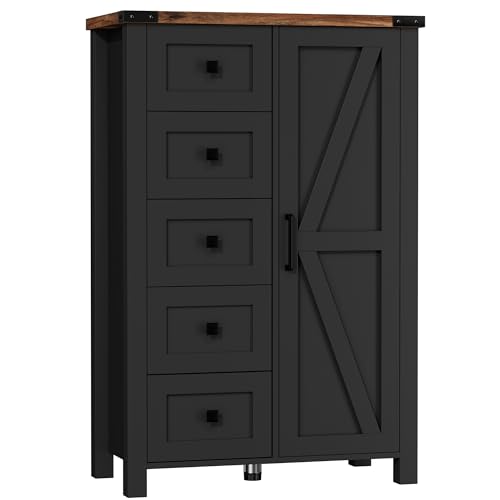
Barn Door Dresser: Rustic Sliding-Door Storage Explained
A barn door dresser pairs the charm of farmhouse sliding doors with practical bedroom storage. This guide breaks down styles, interior layouts, hardware quality tiers, and how to choose the right piece for your space.
Start the Buying GuideWhy a barn door dresser? Unlike a traditional dresser with exposed drawers or swinging doors, a barn door dresser hides its contents behind sliding panels on a visible track. The result is a cleaner silhouette, a stronger rustic statement, and storage that works well in rooms where floor space is limited.
What Is a Barn Door Dresser?
A barn door dresser is a bedroom storage piece that uses sliding doors mounted on an exterior track instead of conventional hinged doors or open drawer fronts. The door panels slide laterally along a metal rail, echoing the look of a sliding barn door. Inside, you typically find a mix of shelves, a hanging rod, and sometimes internal drawers.
This design has grown in popularity because it solves a real problem: hinged doors need clearance to swing open, which can be awkward in tighter bedrooms. A sliding barn door moves along the face of the unit, so the dresser can sit closer to a wall, a bed, or a doorway. If you are comparing layout options, our guide to armoires explains how hinged-door storage differs from sliding configurations.
Style-wise, the barn door dresser leans rustic and farmhouse, but modern versions soften the look with flat-panel doors, matte black hardware, and clean lines. It sits somewhere between a classic chest of drawers and a full wardrobe, making it a versatile anchor piece for a bedroom.
Why Choose a Barn Door Dresser?
Buyers researching this category usually have a specific set of needs. Here is what a barn door dresser does well, and where it asks for a trade-off.
Advantages
- No swing clearance required. Sliding doors move along the front of the unit, so you do not need extra room for doors to open outward.
- Concealed storage. The sliding panels hide shelves, rods, and internal drawers, keeping the bedroom visually calm.
- Strong design statement. The visible track and door panels add texture and character that a flat drawer front cannot match.
- Flexible interior layouts. Many models combine hanging space, adjustable shelving, and drawers, similar to a compact armoire with doors and drawers.
Trade-Offs to Consider
- Track hardware matters. A lightweight rail and basic rollers can feel gritty over time. Heavier steel tracks and sealed rollers glide more smoothly.
- You need front clearance for the track. The door panel sits proud of the cabinet face, so account for a few extra inches of depth.
- One side is open at a time. Depending on the door configuration, you may only access half the interior at once.
If you are weighing this against other storage types, our comparison of a dresser vs armoire helps clarify when a sliding-door piece makes more sense than a hinged wardrobe.
Barn Door Dresser Styles
The barn door silhouette adapts to several design directions. Knowing which one fits your room prevents a mismatch later.
Classic Farmhouse
Weathered wood finishes, X-brace or Z-brace door panels, and black iron-style hardware define the classic farmhouse barn door dresser. This is the most literal interpretation of the style and pairs well with shiplap walls, woven textures, and neutral bedding.
Modern Industrial
Here the door panels are flat or lightly paneled, the track is exposed steel, and the finish leans toward dark stains or matte black. The look is cleaner and more urban, and it works in lofts and contemporary bedrooms. Our modern dressers collection covers similar clean-lined options.
Coastal and Light-Finish
Whitewashed or light natural wood finishes with brushed nickel or matte white hardware give the barn door dresser a lighter, airier feel. This version suits coastal and Scandinavian-influenced rooms and reads less heavy than a dark-stained piece.
Two-Tone and Painted
A painted cabinet body with a contrasting natural wood door panel is a popular middle ground. It keeps the rustic texture of the sliding door while letting the piece blend into a more polished color scheme. If you like the painted direction, our painted dressers guide explores finish options in more depth.
Materials, Hardware, and Quality Tiers
Two barn door dressers can look identical in a photo and feel completely different in person. The difference usually comes down to the cabinet material and the sliding hardware.
Cabinet Construction
- Engineered wood with veneer. Common in entry-level and many mid-range models. Stable and consistent, but edges and joints need careful inspection.
- Solid wood. Found in premium and high-end tiers. Heavier, repairable, and more resistant to long-term wear. Oak and pine are common; see our oak dressers and pine dressers guides for material behavior.
- Mixed construction. A solid wood frame with engineered panels is a balanced approach that keeps weight and structural rigidity in check.
Sliding Door Hardware
The track and rollers are the heart of a barn door dresser. This is where tier differences show up most clearly.
- Entry-level tier: Lightweight rails, nylon rollers, and simple stops. Functional, but expect more noise and periodic adjustment.
- Mid-range tier: Heavier steel track, sealed ball-bearing rollers, and better end stops. Noticeably smoother and quieter.
- Premium and luxury tiers: Thick gauge steel rails, precision rollers, soft-close dampers, and reinforced mounting. These glide with minimal effort and hold alignment over years of use.
A mid-range model usually offers a smoother sliding action and better alignment retention than an entry-level piece, while premium hardware is the long-term investment for daily use.
| Tier | Typical Construction | Hardware Character | Best For |
|---|---|---|---|
| Entry-level | Engineered wood with veneer | Light rail, nylon rollers | Guest rooms, light daily use |
| Mid-range | Mixed solid frame and panels | Steel track, sealed rollers | Primary bedrooms, daily use |
| Premium | Mostly solid wood | Heavy steel, soft-close | High-traffic homes, long-term use |
| Luxury | Solid hardwood, joinery-built | Precision hardware, reinforced mounts | Design-led interiors, heirloom intent |
Interior Layout: What's Behind the Sliding Doors?
The exterior gets the attention, but the interior determines whether the piece actually works for you. Barn door dressers generally fall into three layout families.
Wardrobe-Style with Hanging Rod
A full-width hanging rod plus a shelf above is ideal if you want to hang shirts, dresses, or jackets. This layout behaves like a compact armoire wardrobe for clothes and is the most clothing-focused option.
Shelf-and-Drawer Hybrid
Adjustable shelves on one side and internal drawers on the other give you a mix of folded and concealed storage. This is the most flexible layout and suits buyers who want a bedroom dresser with deep drawers but prefer the sliding-door look.
All-Shelf Storage
Fixed or adjustable shelves throughout are best for folded clothing, linens, and accessories. Add drawer dividers and labeled bins to keep smaller items from disappearing into the back.
If you are planning the interior, our dresser organization guide covers folding techniques and zone planning that apply directly to sliding-door storage.
Sizing a Barn Door Dresser for Your Bedroom
Because the doors slide rather than swing, a barn door dresser is more forgiving in tight rooms, but you still need to plan the footprint carefully.
Width and Height
- Narrow and tall. A vertical configuration works well in small bedrooms where wall width is limited. Pair it with a compact small dresser or nightstand for balance.
- Wide and low. A horizontal piece doubles as a surface for decor and a mirror. This is the classic dresser proportion and suits larger primary bedrooms.
- Standard wardrobe width. A two-door unit is the most common barn door dresser size and balances hanging space with shelf storage.
Depth and Clearance
The sliding door panel sits in front of the cabinet face, so the overall depth is slightly greater than the cabinet body alone. Leave a few inches between the dresser front and any adjacent furniture or doorway. Unlike a hinged wardrobe, you do not need swing clearance, which is a real advantage in narrow rooms. Our dresser size guide walks through measurement planning in detail.
Placement Tips
- Center the dresser on the wall opposite the bed for visual balance.
- Leave enough room on at least one side for the door to slide fully open.
- If the piece sits near a doorway, confirm the track does not interfere with the door swing.
- Anchor the dresser to the wall, especially in homes with children or pets.
Barn Door Dresser Buying Checklist
Use this checklist before you commit. It focuses on the details that separate a piece that lasts from one that frustrates you after a few months.
- Test the slide. If you can see the piece in person, open and close both doors. They should glide without wobble, rattle, or binding.
- Check the track gauge. A heavier steel rail resists flexing. Thin rails are a common weak point in entry-level units.
- Inspect roller quality. Sealed ball-bearing rollers are smoother and quieter than exposed nylon wheels.
- Confirm the interior layout. Decide whether you need hanging space, shelves, drawers, or a mix before you buy.
- Measure the footprint. Include the door panel depth and the space needed for one door to slide open.
- Verify anti-tip hardware. Wall anchoring is essential for tall storage pieces.
- Match the finish to the room. Dark stains feel heavier; light and painted finishes keep the room airy.
For a broader decision framework, our complete dresser buying guide covers construction, drawer mechanics, and long-term durability in more depth.
Barn Door Dresser vs Other Storage Types
Understanding how this piece differs from nearby categories helps you choose with confidence.
| Storage Type | Door Mechanism | Best For |
|---|---|---|
| Barn door dresser | Sliding panel on exterior track | Rustic style, tight clearance, mixed hanging and shelf storage |
| Traditional dresser | Open drawers | Folded clothing, quick access, classic bedroom layouts |
| Armoire | Hinged doors | Full wardrobe storage, swing clearance available |
| Chest of drawers | Stacked drawers | Vertical storage in narrow footprints |
If you are deciding between a sliding-door piece and a hinged wardrobe, our dresser vs wardrobe comparison is a useful next read. For a pure drawer-focused alternative, see the chest of drawers category.
Styling a Barn Door Dresser
The sliding door face is a design feature, so treat the dresser top and surrounding wall with intention.
- Keep the top light. A mirror, a small lamp, and one or two decorative objects are enough. Heavy styling hides the door detail.
- Let the hardware speak. If the track and pulls are the focal point, avoid competing with busy wallpaper behind the piece.
- Use a mirror to bounce light. A leaning or wall-mounted mirror above the dresser brightens darker rustic finishes. Our dresser mirror ideas guide has layout suggestions.
- Coordinate with bedding and rugs. Woven textures, linen, and natural fiber rugs reinforce the farmhouse feel without overdoing it.
For broader room-level inspiration, browse our bedroom dresser ideas and farmhouse dresser decor collections.
Who Should Buy a Barn Door Dresser?
This piece is a strong fit if you want concealed, character-rich storage without the swing clearance a hinged wardrobe needs. It suits farmhouse, rustic, industrial, and coastal bedrooms, and it works especially well in rooms where the bed or doorway limits floor space.
It may not be the right choice if you prefer instant access to open drawers, if you need maximum drawer depth, or if your room's style is strictly minimalist and glossy. In those cases, a conventional bedroom dresser or a tall dresser may serve you better.
Frequently Asked Questions
What is a barn door dresser?
A barn door dresser is a storage piece that uses sliding doors mounted on a visible track instead of traditional hinged doors or exposed drawers. The design mimics the look of a sliding barn door, giving it a rustic, farmhouse-inspired character.
How much space does a barn door dresser need?
Because the doors slide along a track on the front of the unit, a barn door dresser needs the same footprint as a conventional dresser of similar width, but you do not need extra clearance for doors to swing open. This makes it a good choice for tighter bedrooms.
Are sliding barn doors on dressers durable?
Durability depends on the track and hardware quality. Entry-level models often use lightweight rails and nylon rollers, while mid-range and premium tiers typically feature heavier steel tracks and sealed ball-bearing rollers that glide more smoothly and last longer.
What interior layout should I look for inside a barn door dresser?
Most barn door dressers combine open shelving, a hanging rod, and sometimes internal drawers. Look for adjustable shelves and a layout that matches your folding, hanging, and accessory storage needs.
Can a barn door dresser work in a small bedroom?
Yes. Since the doors slide rather than swing, a barn door dresser can be placed closer to walls or furniture. Choosing a narrower width and a tall, vertical configuration helps maximize storage in small spaces.
Ready to Compare Barn Door Dressers?
Browse recommended barn door dressers and related bedroom storage pieces below. Compare styles, interior layouts, and hardware tiers to find the right fit for your room.
View Recommended Options