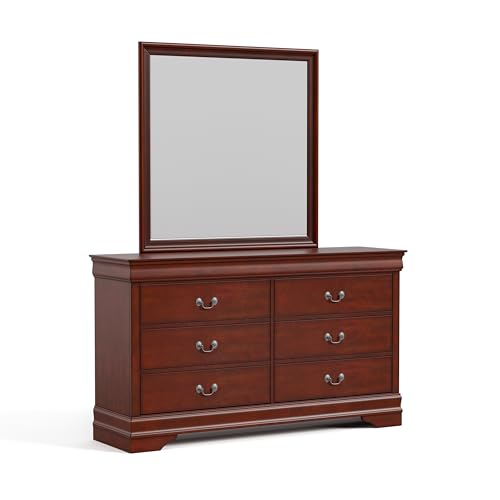
Antique Dresser with Mirror: A Timeless Bedroom Centerpiece
Explore the charm, craftsmanship, and practical considerations of antique dressers with mirrors. Learn how to identify quality pieces, match them to your space, and choose one that lasts for generations.
Why an antique dresser with mirror? Few furniture pieces combine function, history, and visual drama as elegantly as an antique dresser with an attached mirror. Whether you are furnishing a primary bedroom, a guest suite, or a dressing area, these pieces offer generous storage while serving as a striking focal point. This guide walks you through the styles, materials, mirror configurations, and practical checks you need before committing to a piece.
What Defines an Antique Dresser with Mirror?
An antique dresser with mirror is a traditional storage piece, typically constructed from solid wood, that pairs a set of drawers with a vertical or tilting mirror mounted to the back of the top surface. Genuine antiques usually date from the 19th or early 20th century and are valued for their joinery, patina, and period detailing. However, the term is also used loosely for vintage-inspired reproductions that capture the same aesthetic without the age-related wear.
Key characteristics to look for include dovetailed drawer joints, solid wood drawer sides, period-appropriate hardware, and a mirror that is either original or a faithful replacement. The combination of storage and a full-height reflective surface makes these dressers especially useful in bedrooms where floor space is limited and a separate vanity is not practical.
Antique vs. Vintage vs. Reproduction
Understanding the difference helps you set realistic expectations. True antiques are at least 100 years old and often carry historical provenance. Vintage pieces are typically mid-20th century and may blend antique styling with more modern construction methods. Reproductions are newly manufactured in antique styles, offering the look without the conservation concerns. Each category sits in a different position in the market — from entry-level reproductions to premium and luxury antique originals — and each requires a different level of care.
Popular Antique Dresser Styles with Mirrors
The style of the dresser should harmonize with your bedroom's overall design language. Below are the most common antique styles you will encounter, along with the visual cues that define each one.
Victorian
Ornate carvings, turned legs, and often a marble or wood top. Mirrors are frequently tall and arched, sometimes with finials. Look for rich mahogany or walnut finishes.
French Provincial
Curved fronts, delicate cabriole legs, and soft painted or natural wood finishes. Mirrors are usually generously sized and framed with subtle molding.
Edwardian
Cleaner lines than Victorian pieces, with inlay work and lighter woods. Mirrors tend to be rectangular and understated, making them versatile in modern rooms.
Farmhouse & Country
Pine or oak construction with visible grain, simple hardware, and a weathered patina. Mirrors are often simple rectangular frames that feel casual and warm.
Art Deco
Geometric lines, stepped profiles, and veneered surfaces. Mirrors may be angled or shield-shaped, adding a distinctly architectural feel.
Chippendale & Georgian
Formal proportions, bracket feet, and intricate detailing. These are often premium or luxury collectibles that demand careful sourcing and authentication.
If you are drawn to the ornate character of Victorian or French Provincial pieces but need a specific drawer count, you may want to explore options like a 9-drawer French Provincial dresser that balances period styling with generous storage. For rooms with a more relaxed aesthetic, a rustic antique with a simple mirror frame can feel just as intentional.
Mirror Configurations: Which Type Suits Your Space?
The mirror is often what makes an antique dresser truly distinctive. There are three main configurations, each with practical trade-offs.
Attached Flat Mirror
The mirror is fixed directly to the back of the dresser top, usually with brackets or a wooden support. This is the most common configuration and provides a stable, full-height reflective surface. It is ideal when you want a dedicated dressing station and have wall space to accommodate the dresser's footprint. Because the mirror cannot be repositioned, measure the ceiling height and the dresser's overall height carefully before committing.
Tilting Mirror
A tilting mirror is mounted on pivots so it can be angled toward the user. This is especially useful in rooms with limited natural light or when the dresser sits lower than eye level. Tilting mirrors are common on Victorian and Edwardian pieces and add a functional, adjustable element that fixed mirrors lack.
Removable or Detachable Mirror
Some antique dressers were designed with mirrors that could be removed, allowing the dresser to function as a sideboard or chest when needed. Detachable mirrors offer flexibility in placement and make moving the piece significantly easier. If you are considering a antique dresser vanity with mirror, check whether the mirror is structurally integral or a separate component.
Practical tip: Always confirm whether the mirror is original to the dresser. An original mirror in good condition adds character and often supports the piece's value. A replacement mirror is not necessarily a dealbreaker, but it should be disclosed and should match the frame style and proportions.
Materials and Construction: What to Inspect
The durability of an antique dresser with mirror depends heavily on its construction. Older pieces were often built with solid wood and traditional joinery, but condition varies widely. Use the following checklist when evaluating a piece.
- Drawer joints: Dovetail joints are a hallmark of quality. Hand-cut dovetails suggest an older piece, while machine-cut dovetails may indicate a later date or a reproduction.
- Drawer runners: Wood-on-wood runners are common in antiques. Check for excessive wear, splitting, or repairs that could affect smooth operation.
- Wood species: Mahogany, walnut, oak, and pine are the most common. Each has distinct grain patterns and aging characteristics. Mahogany and walnut tend to be in the premium and luxury tiers, while pine and oak are frequently found in entry-level and mid-range antique pieces.
- Veneer condition: Many antique dressers use veneer over solid wood. Check for lifting, bubbling, or missing sections, especially along edges and drawer fronts.
- Hardware: Original brass or iron hardware is desirable. Replacements are acceptable if they are period-appropriate, but mismatched hardware can signal past repairs.
- Mirror glass: Antique mirrors often show foxing (spotting) or desilvering. Some buyers prize this patina; others prefer a clearer reflection. Decide which matters more to you before you buy.
Sizing an Antique Dresser with Mirror for Your Bedroom
Because the mirror adds vertical height, sizing is more nuanced than with a standard dresser. Start by measuring the available wall space, including ceiling height, and account for any crown molding or light fixtures. Then consider the following dimensions.
| Consideration | What to Check | Why It Matters |
|---|---|---|
| Width | Compare the dresser width to the wall segment and adjacent furniture | Prevents crowding and ensures drawers can open fully |
| Height (with mirror) | Measure total height including the mirror frame | Ensures clearance below ceiling fixtures and window trim |
| Depth | Allow at least 24–30 inches of clearance in front | Keeps walkways usable and drawers accessible |
| Mirror angle | Check whether a tilting mirror extends beyond the dresser depth | Affects placement near doorways and foot-of-bed layouts |
For narrow rooms, a antique dresser with curved front can soften the visual bulk and fit more gracefully into tight footprints. If you need a wider piece for a primary bedroom, look at antique styles that were originally designed as sideboards or large chests — they often provide more surface area without overwhelming the room.
How to Evaluate Condition Before You Buy
Antique furniture is sold in a wide range of conditions, from museum-grade to project pieces. Knowing what you are looking at helps you make a confident decision.
Structural Checks
- Open and close every drawer. They should slide smoothly without excessive wobble.
- Check the back panel and underside for signs of water damage, insect activity, or major repairs.
- Rock the dresser gently to test for loose joints or a warped frame.
- Inspect the mirror mounting. Brackets, screws, and support arms should be secure.
Cosmetic Checks
- Look for deep scratches, burns, or stains on the top surface.
- Examine the mirror glass for cracks, chips, or heavy desilvering.
- Check whether the finish is original or has been refinished. A sympathetic refinish is acceptable; a heavy, plastic-like coating may reduce character.
Important: If you are buying online, request detailed photos of drawer joints, the back panel, the mirror edges, and any areas of repair. Ask specific questions about stability and whether the mirror is original. A reputable seller will provide this information willingly.
Styling an Antique Dresser with Mirror
An antique dresser with mirror is a natural focal point, so styling should enhance rather than compete with it. Keep the top surface relatively uncluttered — a small tray for jewelry, a lamp with a warm shade, and one or two decorative objects are usually enough. Let the mirror do the visual work by reflecting light and opening up the room.
In bedrooms with a modern or minimalist palette, an antique piece adds warmth and texture without feeling out of place. In more traditional rooms, it reinforces the overall aesthetic. If you are building a coordinated bedroom, consider pairing the dresser with complementary storage such as a antique chest of drawers or a dresser with doors and drawers for a layered, collected look.
Placement Ideas
- Across from the bed: Creates a balanced focal wall and provides a convenient dressing station.
- In a dressing nook: Use the mirror as the centerpiece of a dedicated getting-ready area.
- In a guest room: Offers both storage and a full-length reflection for visitors.
- In a hallway or landing: A narrow antique dresser with mirror can serve as a stylish console with storage.
Care and Maintenance for Longevity
Antique furniture rewards gentle care. Avoid harsh chemical cleaners, excessive moisture, and direct sunlight, which can fade finishes and damage veneer. Dust regularly with a soft cloth, and use a mild, pH-neutral wood cleaner sparingly. For mirrors, use a non-ammonia glass cleaner applied to a cloth rather than sprayed directly onto the glass, and avoid letting liquid seep behind the frame.
Maintain indoor humidity at a stable level — dramatic swings can cause wood to expand and contract, leading to cracks or loose joints. If a drawer begins to stick, a small amount of paraffin wax on the runners is usually sufficient. For significant repairs, consult a professional conservator rather than attempting DIY fixes that could reduce the piece's integrity or character.
Quick Buying Checklist
- Measure wall width, ceiling height, and walkway clearance
- Confirm mirror type: fixed, tilting, or detachable
- Inspect drawer joints and runner condition
- Check for veneer lifting and water damage
- Verify mirror glass condition and originality
- Test stability and drawer smoothness
- Review hardware for period appropriateness
- Ask about repairs, refinishing, and provenance
Frequently Asked Questions
Is an antique dresser with mirror worth the investment?
For many buyers, yes. A well-preserved antique offers construction quality and character that are difficult to replicate in new furniture. The long-term investment depends on the piece's condition, rarity, and provenance. Entry-level and mid-range antiques are accessible options for everyday use, while premium and luxury pieces tend to hold their appeal among collectors. Focus on construction quality and condition rather than age alone.
Can I use an antique dresser with mirror in a modern bedroom?
Absolutely. The contrast between an antique piece and modern surroundings often creates the most memorable rooms. Keep the surrounding palette calm and let the dresser serve as the focal point. A single antique piece can add warmth and depth to an otherwise minimalist space.
What should I do if the mirror is cloudy or spotted?
Foxing and desilvering are common in antique mirrors and are often considered part of the piece's character. If the spotting is minor, leave it as is. If the mirror is severely degraded and you prefer a clearer reflection, consult a professional glass restorer. Replacing the glass is possible but should be done carefully to preserve the frame and mounting.
How do I move an antique dresser with a mirror safely?
If the mirror is detachable, remove it first and wrap it separately. If it is fixed, use moving blankets and straps to secure the mirror during transport, and always lift the dresser rather than dragging it. Empty all drawers before moving to reduce weight and prevent damage to the runners.
Are reproductions a good alternative to genuine antiques?
Reproductions can be a sensible choice if you want the antique look without the conservation responsibilities. Quality varies widely, so inspect construction details such as drawer joints and hardware just as you would with an antique. A well-made reproduction in the mid-range or premium tier can serve beautifully for years, while top-tier reproductions may closely mimic period craftsmanship.
Final Thoughts
An antique dresser with mirror is more than a storage solution — it is a piece of history that brings warmth, depth, and a sense of permanence to a bedroom. By understanding the styles, inspecting construction carefully, and planning placement around the mirror's height and angle, you can choose a piece that serves you beautifully for years. Whether you lean toward the ornate charm of Victorian design or the clean lines of Edwardian craftsmanship, the right antique dresser with mirror will anchor your space with character and function in equal measure.
Ready to Find Your Antique Dresser with Mirror?
Browse our curated selection of antique and vintage-inspired dressers with mirrors, and compare styles, mirror configurations, and construction details in one place.
Explore Options